
Learning made easy
Why should training be difficult? There's nothing more important than providing your team with the training they need to succeed. That's why we created etrainu.
Let us make learning easy with an intuitive platform and world-class courses, so you can focus on what you do best.





A proven learning solution for



Why etrainu?
Courses
Discover world-class eLearning experiences
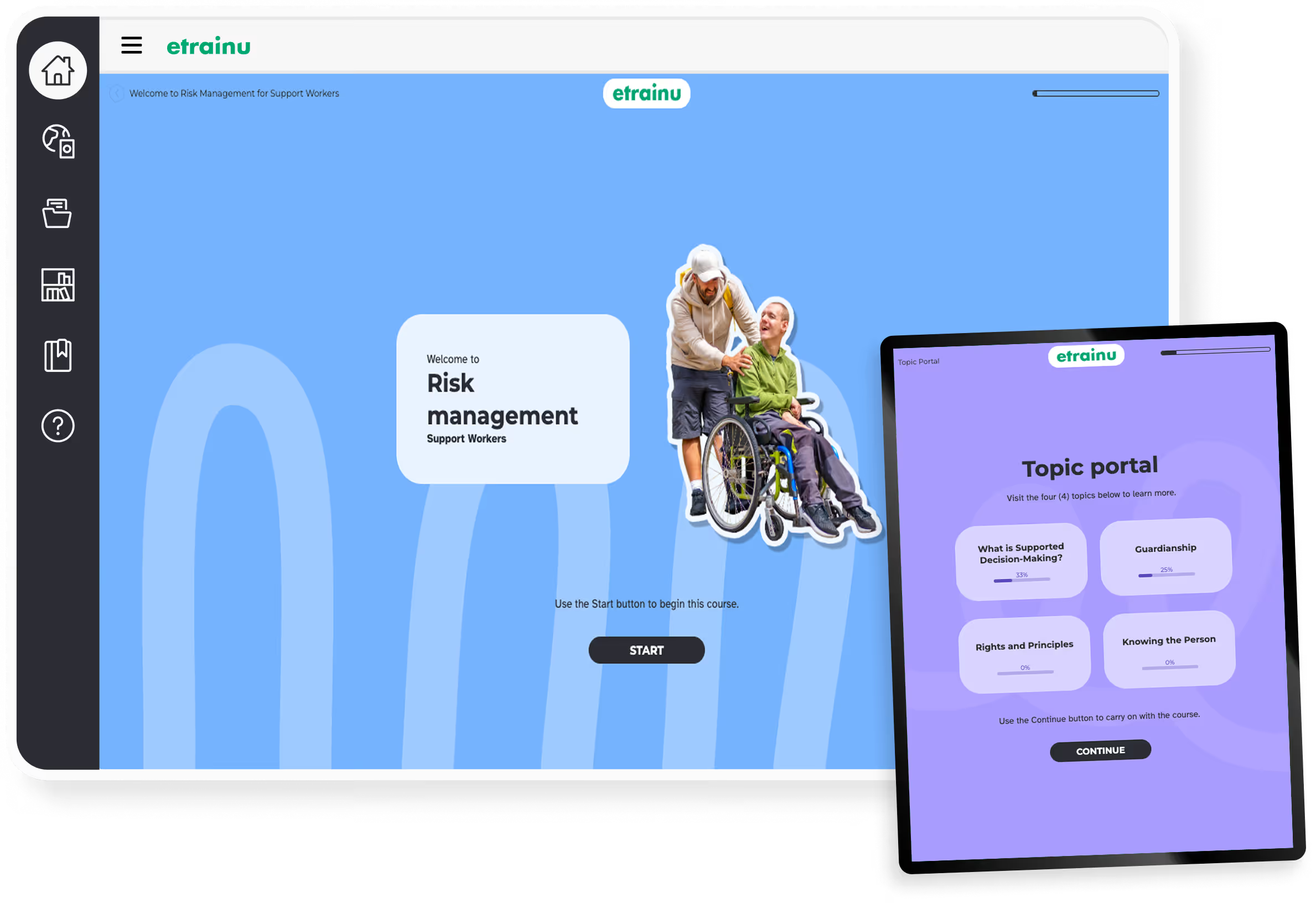
Our content isn't just run-of-the-mill; it's created by experts in their fields and brought to life by our in-house studio team. Our courses are designed to be interactive and encourage learning beyond traditional boundaries. Join us to expand your knowledge and skills.
Learning management system
Keep learners on track with an easy-to-use platform
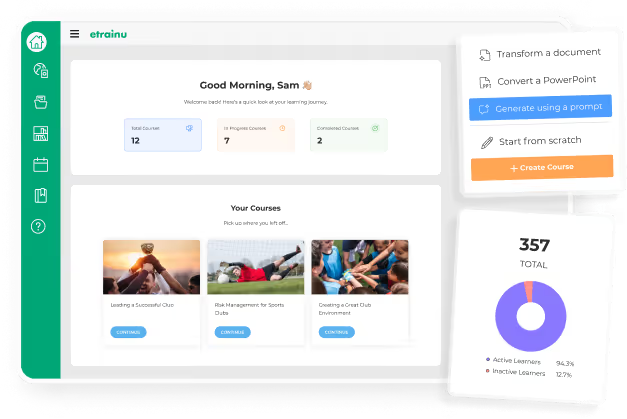
We strip away the complexities and the unnecessary. Designed to be simple, our platform ensures learners never feel overwhelmed or lost. Our user-friendly interface makes the platform perfect for volunteers and busy teams, providing a smooth and efficient learning experience.

The etrainu ecosystem
Get the best of both worlds with our sector-specific courses and Learning Management System (LMS).
etrainu Courses
At etrainu, we specialise in providing sector-specific course content and compliance training that upskills your team and meets industry-specific requirements.
etrainu LMS
Built and owned by us, our LMS is scalable to your organisation’s needs. You can choose from our fully customised solution, a ready-to-use off-the-shelf option, or something in between.
Explore our most popular courses



Start building your community with etrainu
